Why Canada’s Harsh Climate Is Forcing a Construction Revolution
The End of Traditional Construction in Canada’s Extreme Climate?
Reading time: 5-6 minutes
Introduction
Canada is one of the most demanding construction environments in the world. From heavy snow loads in Alberta, freezing temperatures in the north, to strong coastal winds in British Columbia, infrastructure projects must be designed not only for performance — but for survival. Traditional construction methods often struggle to keep up with these conditions. That’s why modular construction is rapidly becoming the preferred solution for schools, healthcare facilities, and workforce housing across Canada.
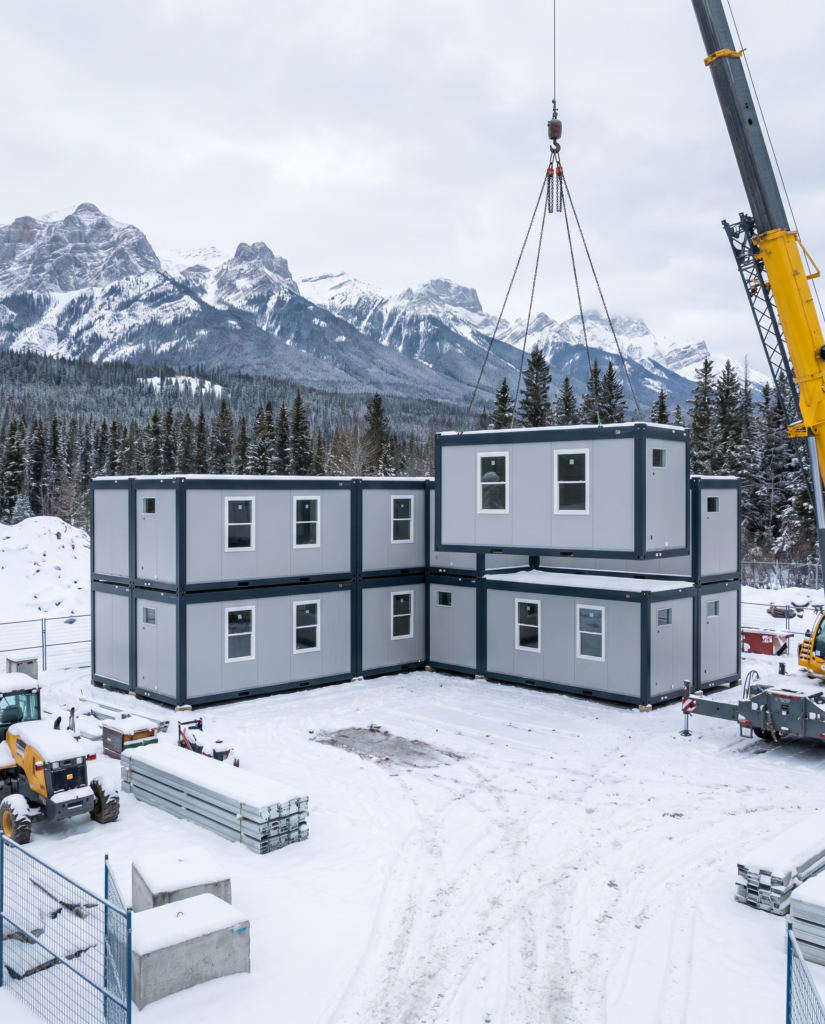
In many parts of Canada, buildings must withstand:
– Heavy snow accumulation that puts extreme structural load on roofs
– Sub-zero temperatures that can cause material fatigue and construction delays
– High wind zones, especially in open rural and coastal regions
– Seasonal accessibility limitations in remote areas
– Conventional on-site construction is often delayed, costly, and weather-dependent.
Modular steel-frame systems, on the other hand, are engineered in controlled environments where quality and structural precision are guaranteed before the unit even reaches the site.
This fundamentally changes how buildings perform in extreme climates.
Steel-frame modular construction offers several key advantages over traditional building methods in harsh Canadian environments:
1. Structural Strength Under Load
Steel frames are designed to handle significant snow and wind loads without deformation, making them ideal for northern and alpine regions.
2. Precision Manufacturing in Controlled Conditions
Unlike site-built structures exposed to weather delays, modular units are built indoors — ensuring consistency, accuracy, and material integrity.
3. Faster Assembly in Harsh Seasons
In Canada, short construction seasons can significantly delay projects. Modular systems reduce on-site work to a minimum, allowing rapid installation even in colder months.
4. Reduced Weather Dependency
Since most of the construction happens off-site, weather delays are dramatically reduced — a critical advantage in regions with long winters.
Modular systems are not theoretical solutions — they are already being used globally in environments similar to Canada’s climate challenges.
Applications include:
– Arctic and sub-arctic workforce housing
– Remote mining and energy site accommodation
– Emergency and temporary healthcare facilities
– Educational infrastructure in rural or northern communities
Their adaptability makes them particularly valuable where logistics and weather make traditional construction inefficient or impossible.
– Use Cases Across Canada’s Key Sectors
– Schools and Educational Facilities
Canada’s growing population and remote communities require fast deployment of educational infrastructure. Modular classrooms can be expanded, relocated, or scaled as population needs change.
In rural and underserved regions, access to healthcare infrastructure is critical. Modular clinics provide rapid deployment solutions without compromising medical-grade standards. Industries such as mining, oil & gas, and renewable energy rely on temporary or semi-permanent housing solutions in extreme environments. Modular housing enables safe, comfortable, and scalable accommodation near job sites.
As Canada continues to expand infrastructure across urban and remote regions, construction must evolve. Speed, resilience, and adaptability are no longer optional — they are essential.
Modular steel-frame construction offers a smarter way forward:
– Faster delivery timelines
– Higher structural resilience
– Lower environmental disruption
– Scalability for future needs
In a country defined by extreme climate and vast geography, modular construction is not just an alternative — it is becoming the standard for future-ready infrastructure.
Conclusion
Canada’s environment demands buildings that are as resilient as the people who live and work in them.
Modular construction provides that resilience — combining engineering precision with real-world adaptability.
For developers, governments, and industries operating in challenging conditions, the question is no longer if modular works in Canada — but how fast it can be implemented at scale.
Share this post
Discover
more blog posts
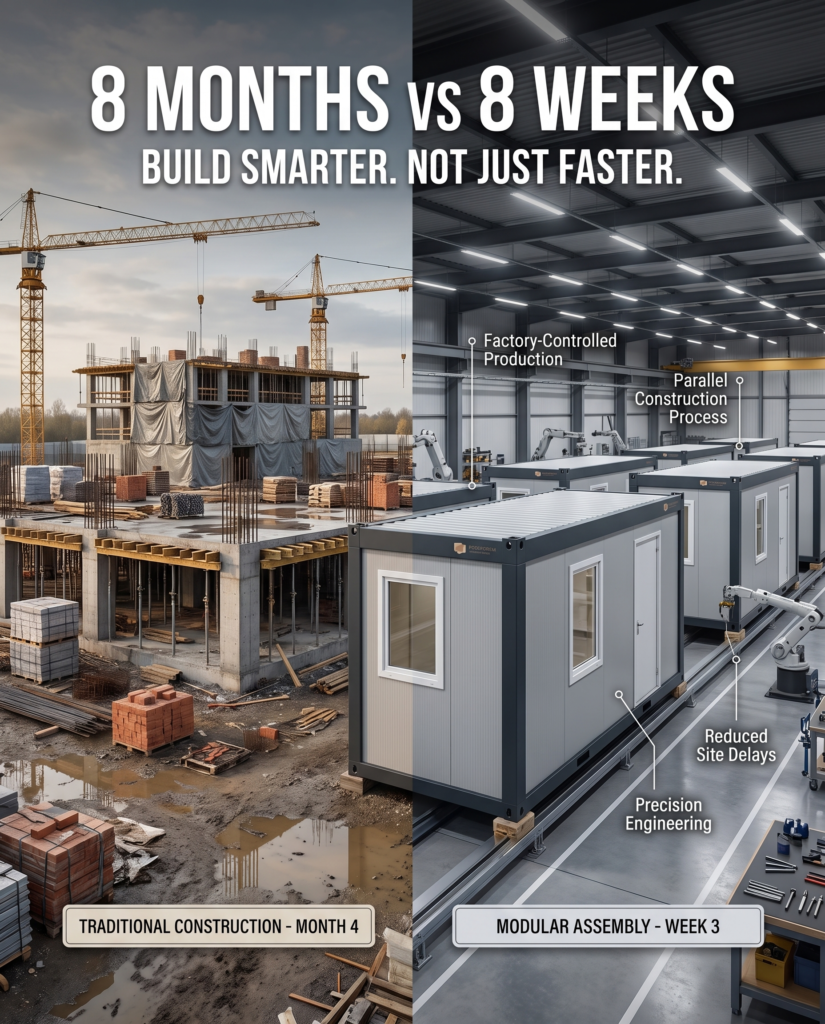
Modular construction is often misunderstood as a temporary solution. In reality, modern modular buildings are engineered for permanent use, combining advanced manufacturing, strict quality control, and smarter project planning to deliver faster construction without compromising performance.

Most modular buildings look solid — until you need them to perform. The hidden weakness in many modular systems is the lack of a proper steel moment frame. Discover why a true steel moment frame gives you superior strength, wind resistance up to 160 mph, better stacking capability, true design flexibility, and long-term durability that cheap modular units simply can’t match. In this article, we reveal the real engineering advantage behind IteraSpace’s OptiMax system and why forward-thinking owners are choosing steel moment frame technology for offices, medical facilities, military, and industrial projects.
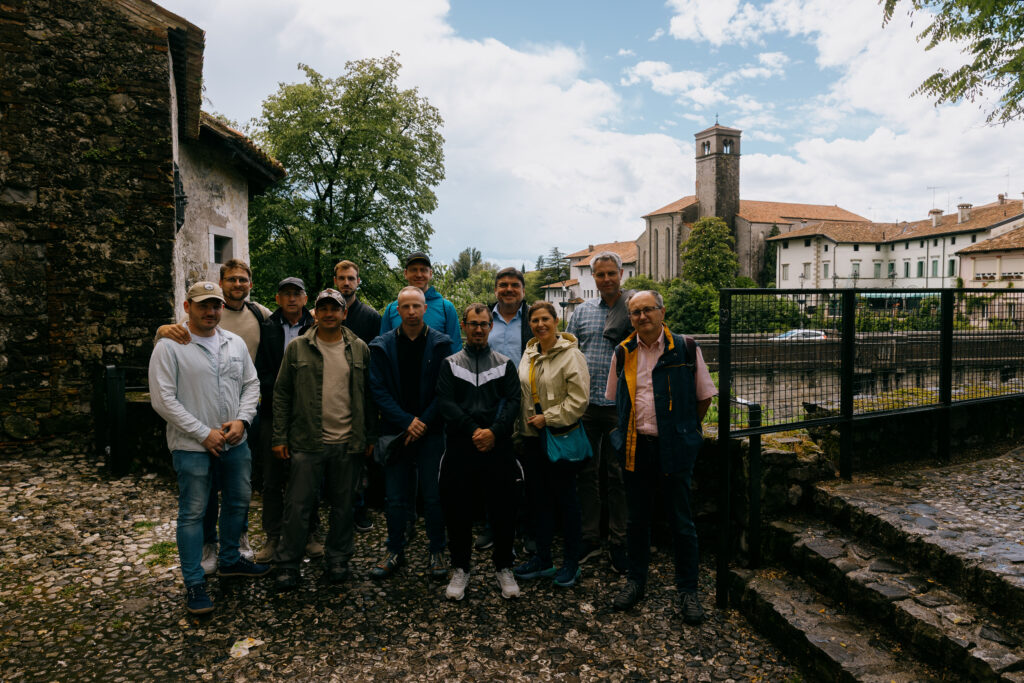
At IteraSpace, we spend our days engineering modular units that can be assembled on remote Pacific islands, U.S. Air Force bases, and shipyards across the globe. So when it came time to plan a company trip, we thought: why not put that same spirit of “deployable anywhere” to the test?
The destination? Friuli, Italy. A region tucked in the northeastern corner of the country, bordered by the Alps, the Adriatic, and some of the most extraordinary prosciutto the world has ever produced. Spoiler: we were not disappointed.
Canada’s extreme climate is exposing the limits of traditional construction. From heavy snow loads to freezing temperatures and high wind zones, building reliably has never been more challenging. Modular steel-frame construction offers a faster, stronger, and more resilient alternative — built to perform in the harshest environments while enabling rapid deployment for schools, clinics, and workforce housing across the country.
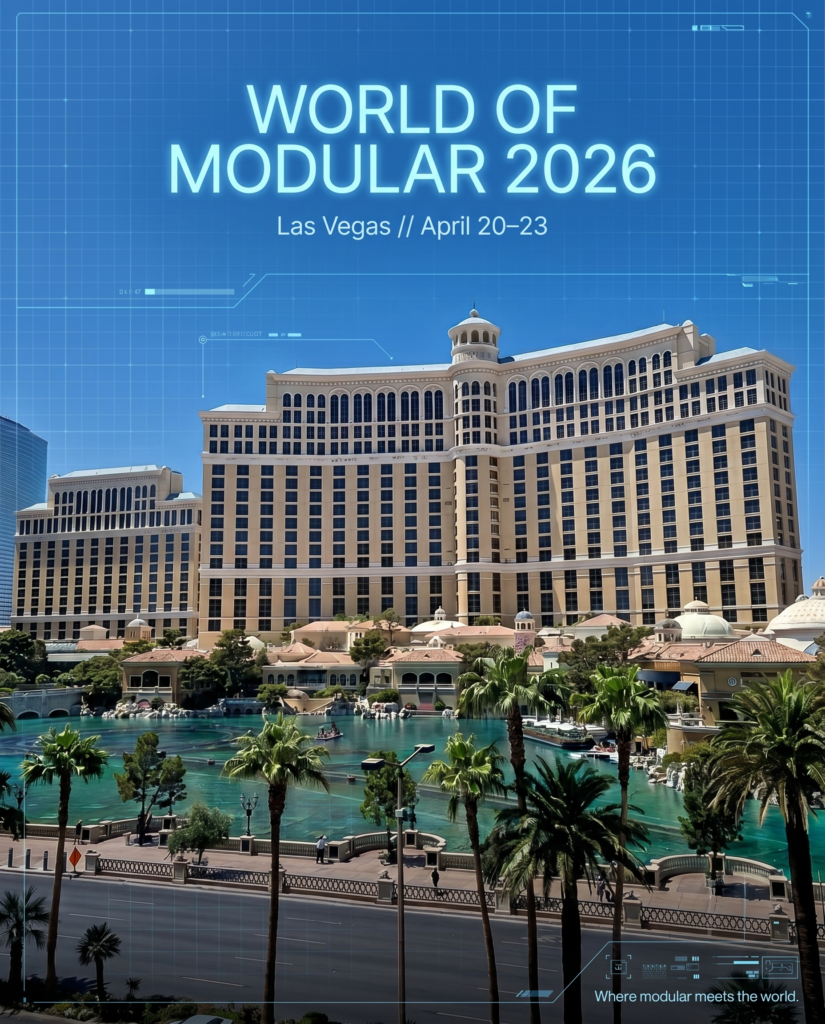
Modular construction is no longer emerging—it’s accelerating. At World of Modular 2026 in Las Vegas, one message stood above the rest: innovation is ready, but policy is holding it back. The question is—will policy keep up?
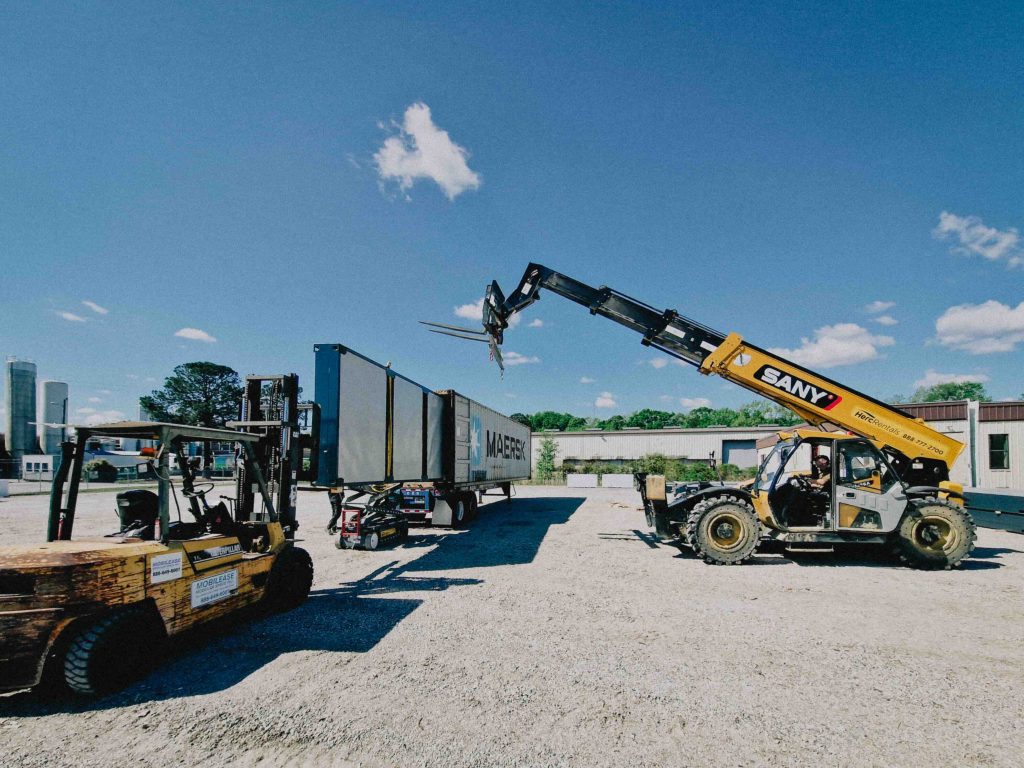
These IBC-compliant units are perfect for businesses, developers, or visionaries looking to build smarter and faster. Don’t miss your chance to grab these high-quality modules and turn your vision into reality!
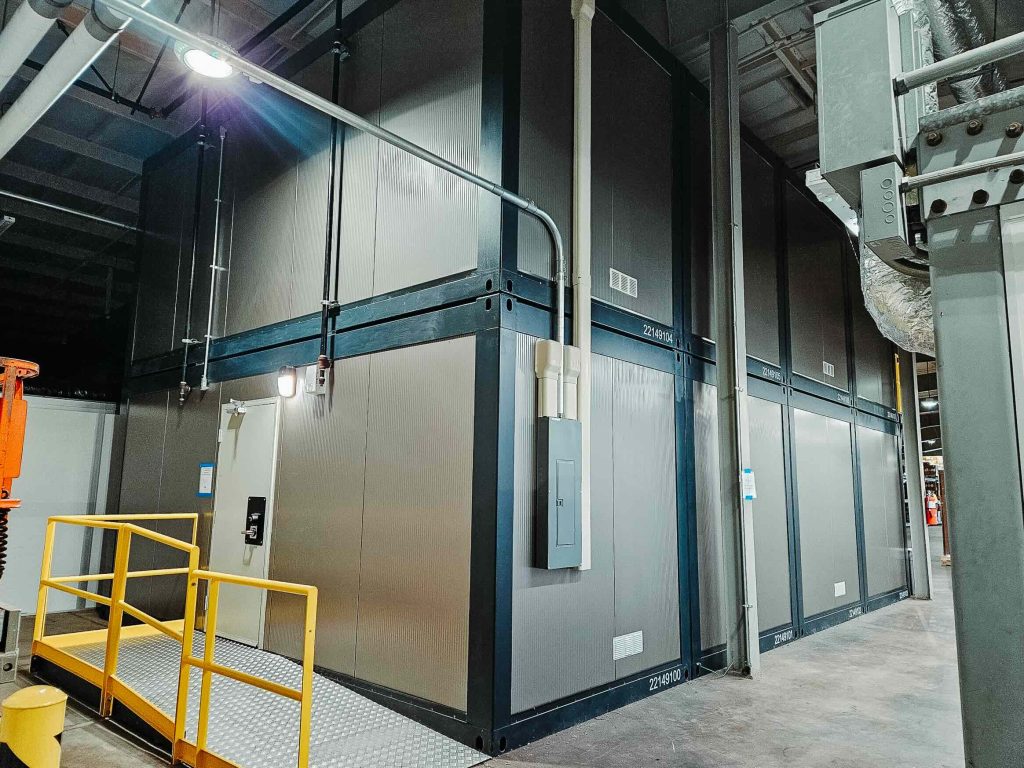
Hawaii’s unique environment presents both incredible opportunities and significant challenges when it comes to construction. Remote locations, unpredictable weather, and logistical hurdles make traditional building methods costly and time-consuming. That’s why modular construction is changing the game—offering faster, more efficient, and sustainable solutions.
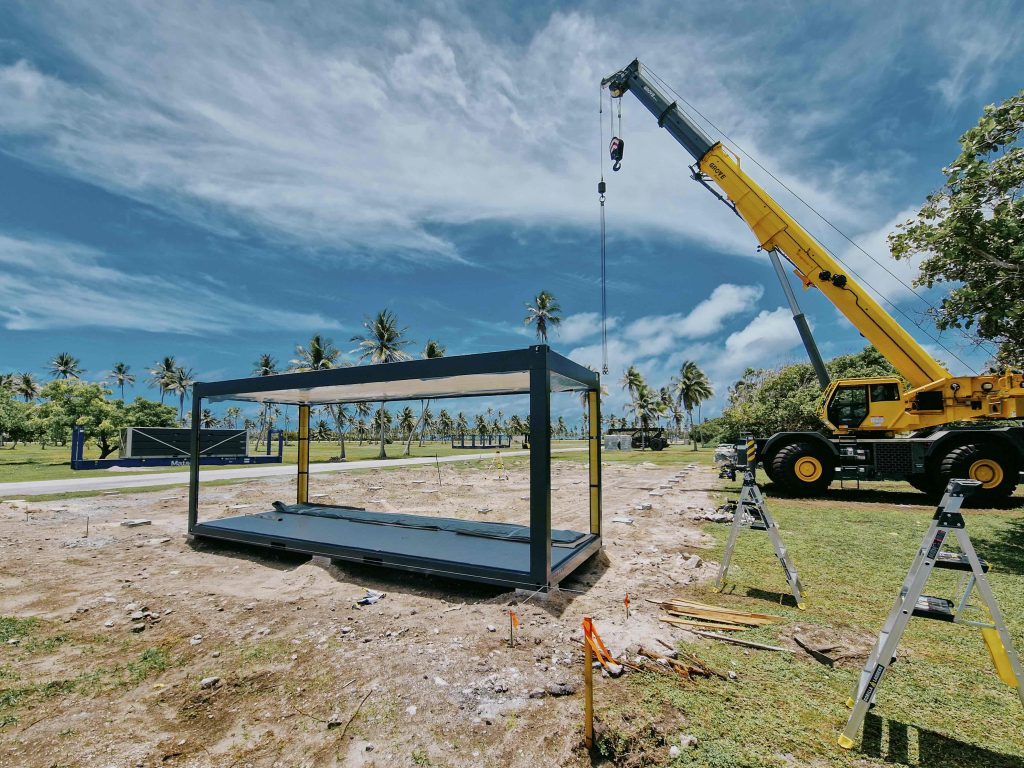
Roi Namur, a remote island in the Pacific, posed a unique set of challenges for our modular construction team. Limited infrastructure, unpredictable weather, and logistical hurdles made traditional construction methods inefficient. That’s where our expertise in modular building made all the difference.