Modular Construction Is Not Temporary: Why Faster Building Does Not Mean Lower Quality
Most people think modular buildings are temporary.
Reading time: 5-10 minutes
Introduction
Modular Construction Is Not Temporary: Why Faster Building Does Not Mean Lower Quality
For decades, the word modular has been associated with temporary classrooms, emergency shelters, or basic structures designed for short-term use.
This perception has created one of the biggest misconceptions in modern construction:
Most people think modular buildings are temporary.
But this assumption overlooks what modular construction has become.
A modular building is not defined by how quickly it can be assembled.
It is defined by how intelligently it is designed, engineered, manufactured, and delivered.
Modern modular construction represents a shift from traditional building methods toward a more controlled, efficient, and predictable way of creating permanent structures.
The question is no longer:
“Can modular buildings match traditional construction?”
The real question is:
Why should developers continue accepting the inefficiencies of traditional construction when a smarter alternative exists?
The Biggest Misconception: Faster Construction Means Lower Quality
One of the biggest mistakes developers make is assuming that speed comes at the expense of quality.
This belief comes from traditional construction thinking, where faster often means cutting corners, reducing materials, or compromising workmanship.
However, modern modular construction works differently.
The reason modular projects can be completed faster is not because the building process is rushed.
It is because the process is optimized.
Instead of relying entirely on sequential construction, where each phase must wait for the previous one to finish, modular construction allows multiple stages of the project to happen simultaneously.
This approach reduces downtime, improves coordination, and creates a more predictable construction timeline.
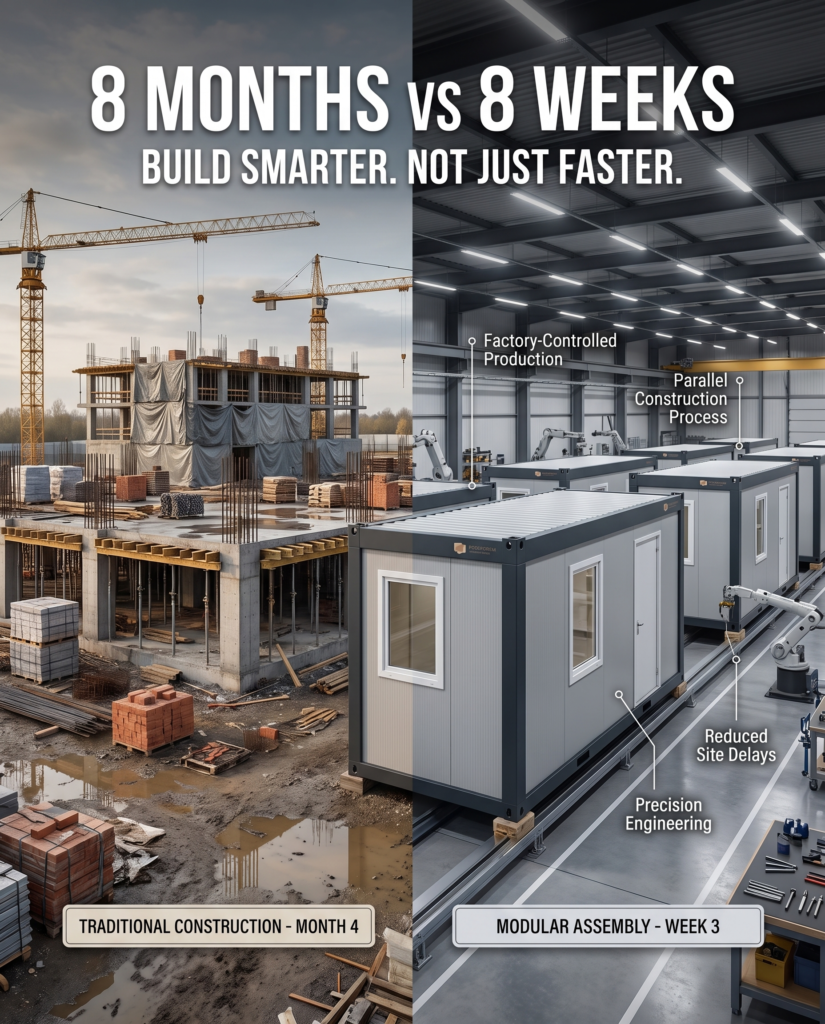
Why Modular Buildings Can Be Completed Faster
1. Factory Production Begins While Site Preparation Is Underway
In traditional construction, the process usually follows a linear path:
Design → Permitting → Site Preparation → Foundation → Structure → Interior Work → Completion
Each stage depends heavily on the previous one.
With modular construction, the workflow changes.
While foundations and site infrastructure are being prepared, the building modules are already being manufactured in a controlled production environment.
This parallel approach significantly reduces overall project duration.
Instead of waiting months before seeing physical progress, developers can move multiple parts of the project forward at the same time.
2. Controlled Manufacturing Reduces Unpredictable Delays
Construction sites are exposed to countless variables:
Weather conditions
Material delivery delays
Labor availability
Site accessibility challenges
Coordination issues between different contractors
A factory-controlled environment eliminates many of these uncertainties.
Because modules are manufactured indoors, production can continue regardless of rain, snow, or extreme temperatures.
This creates a more reliable construction schedule and allows developers to plan with greater confidence.
3. Quality Control Happens Throughout Production
A common misconception is that factory-built means mass-produced and lower quality.
The opposite is often true.
In modular construction, quality control is integrated throughout the manufacturing process.
Each stage can be inspected, measured, and verified before the module reaches the construction site.
This creates several advantages:
Greater consistency between units
Improved precision
Reduced construction errors
Better documentation of the building process
Instead of discovering problems at the end of a project, potential issues can be identified and corrected during production.
Modular Buildings Are Designed for Long-Term Performance
Speed is only one advantage of modular construction.
A well-engineered modular building must meet the same expectations as any traditionally constructed building:
Structural performance
Energy efficiency
Safety requirements
Durability standards
Long-term usability
The difference is not the final result.
The difference is the process used to achieve it.
A modular building is not temporary because it was built faster.
A building becomes temporary only when it was designed for temporary use.
The Future of Construction Is Smarter, Not Just Faster
The construction industry is facing increasing challenges:
Rising labor costs
Skilled worker shortages
Pressure for sustainable solutions
Demand for faster project delivery
Need for greater cost predictability
Modular construction addresses these challenges by introducing a more efficient approach to building.
It combines engineering, manufacturing, and construction into a coordinated process that reduces waste and improves reliability.
The future of construction is not about building faster at the expense of quality.
It is about eliminating unnecessary delays and creating better buildings through smarter processes.
Conclusion
The Real Question Developers Should Ask
The question is not whether modular construction can deliver faster.
The question is:
Would you wait eight months for a building that could be completed in eight weeks — if the quality, durability, and performance remain the same?
The next generation of construction will not be defined by how long we have always taken to build.
It will be defined by how intelligently we build.
Share this post
Discover
more blog posts
Modular construction is often misunderstood as a temporary solution. In reality, modern modular buildings are engineered for permanent use, combining advanced manufacturing, strict quality control, and smarter project planning to deliver faster construction without compromising performance.

Most modular buildings look solid — until you need them to perform. The hidden weakness in many modular systems is the lack of a proper steel moment frame. Discover why a true steel moment frame gives you superior strength, wind resistance up to 160 mph, better stacking capability, true design flexibility, and long-term durability that cheap modular units simply can’t match. In this article, we reveal the real engineering advantage behind IteraSpace’s OptiMax system and why forward-thinking owners are choosing steel moment frame technology for offices, medical facilities, military, and industrial projects.
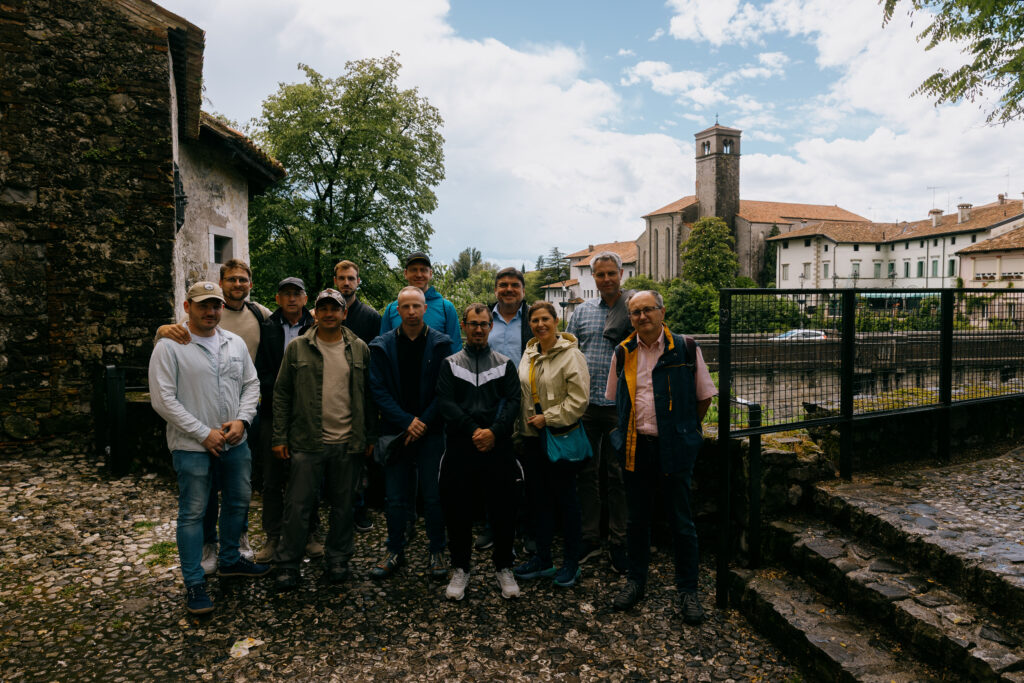
At IteraSpace, we spend our days engineering modular units that can be assembled on remote Pacific islands, U.S. Air Force bases, and shipyards across the globe. So when it came time to plan a company trip, we thought: why not put that same spirit of “deployable anywhere” to the test?
The destination? Friuli, Italy. A region tucked in the northeastern corner of the country, bordered by the Alps, the Adriatic, and some of the most extraordinary prosciutto the world has ever produced. Spoiler: we were not disappointed.
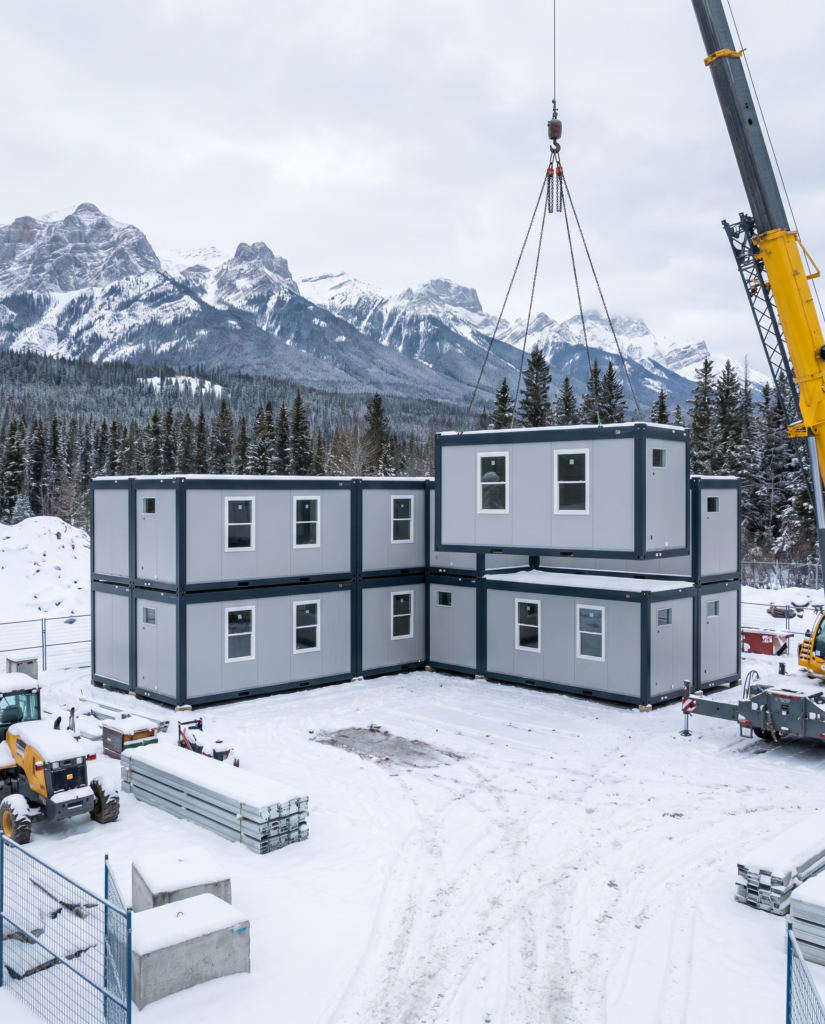
Canada’s extreme climate is exposing the limits of traditional construction. From heavy snow loads to freezing temperatures and high wind zones, building reliably has never been more challenging. Modular steel-frame construction offers a faster, stronger, and more resilient alternative — built to perform in the harshest environments while enabling rapid deployment for schools, clinics, and workforce housing across the country.
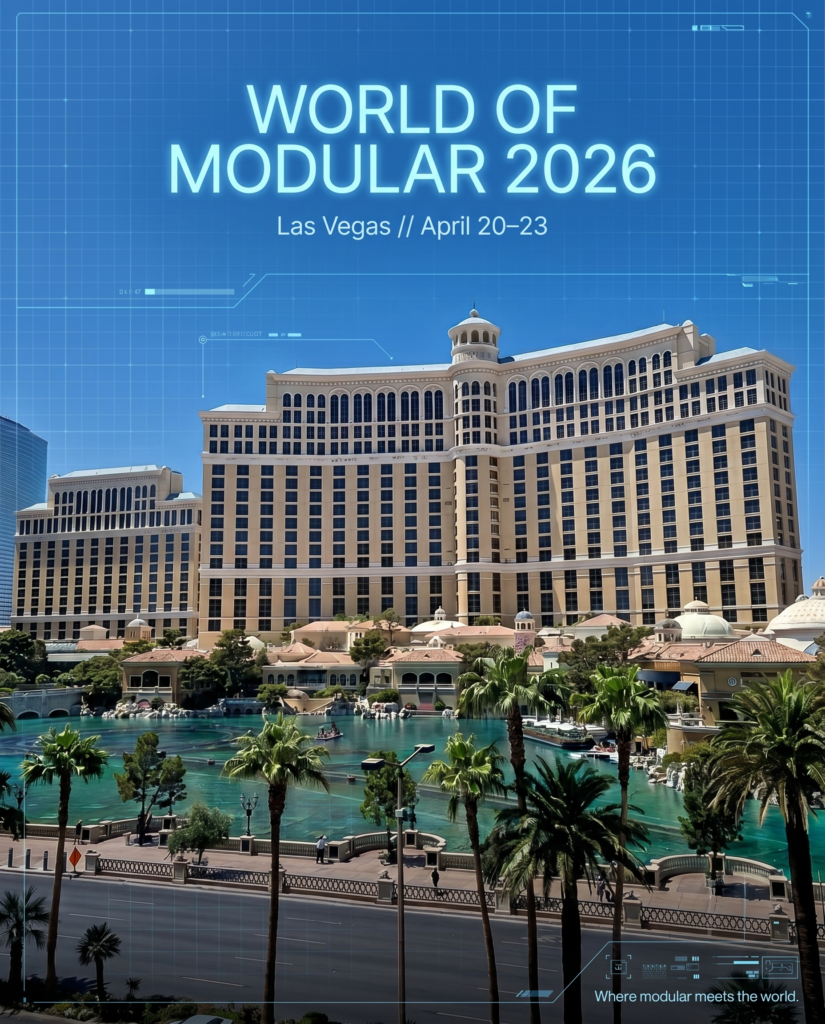
Modular construction is no longer emerging—it’s accelerating. At World of Modular 2026 in Las Vegas, one message stood above the rest: innovation is ready, but policy is holding it back. The question is—will policy keep up?
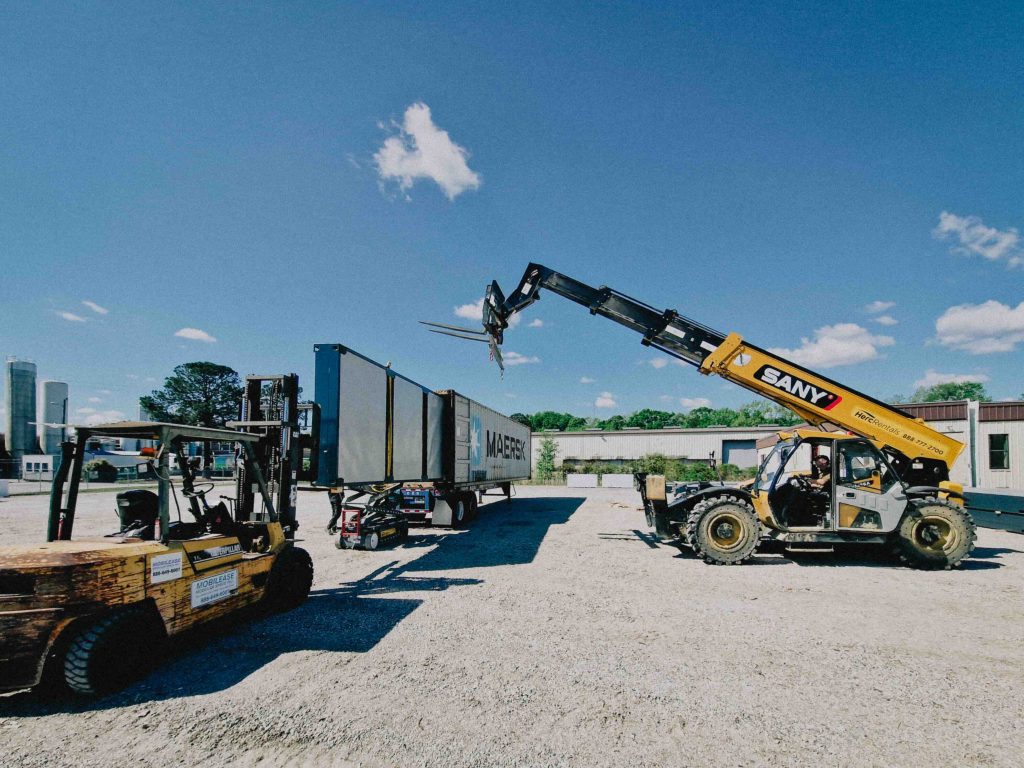
These IBC-compliant units are perfect for businesses, developers, or visionaries looking to build smarter and faster. Don’t miss your chance to grab these high-quality modules and turn your vision into reality!
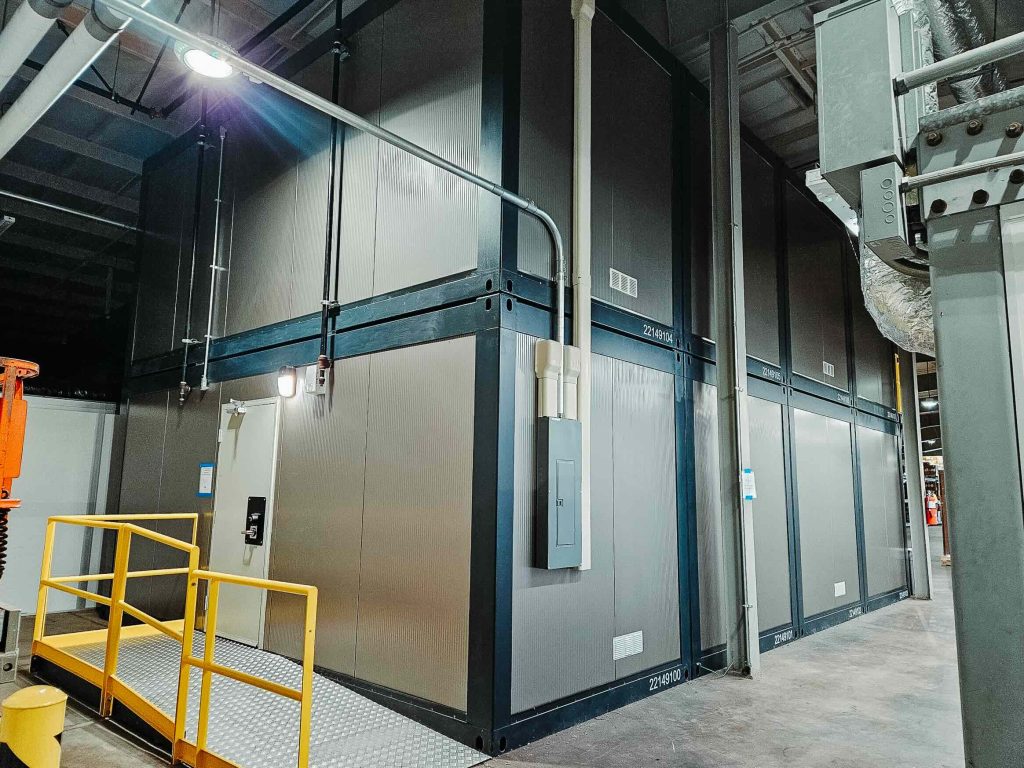
Hawaii’s unique environment presents both incredible opportunities and significant challenges when it comes to construction. Remote locations, unpredictable weather, and logistical hurdles make traditional building methods costly and time-consuming. That’s why modular construction is changing the game—offering faster, more efficient, and sustainable solutions.
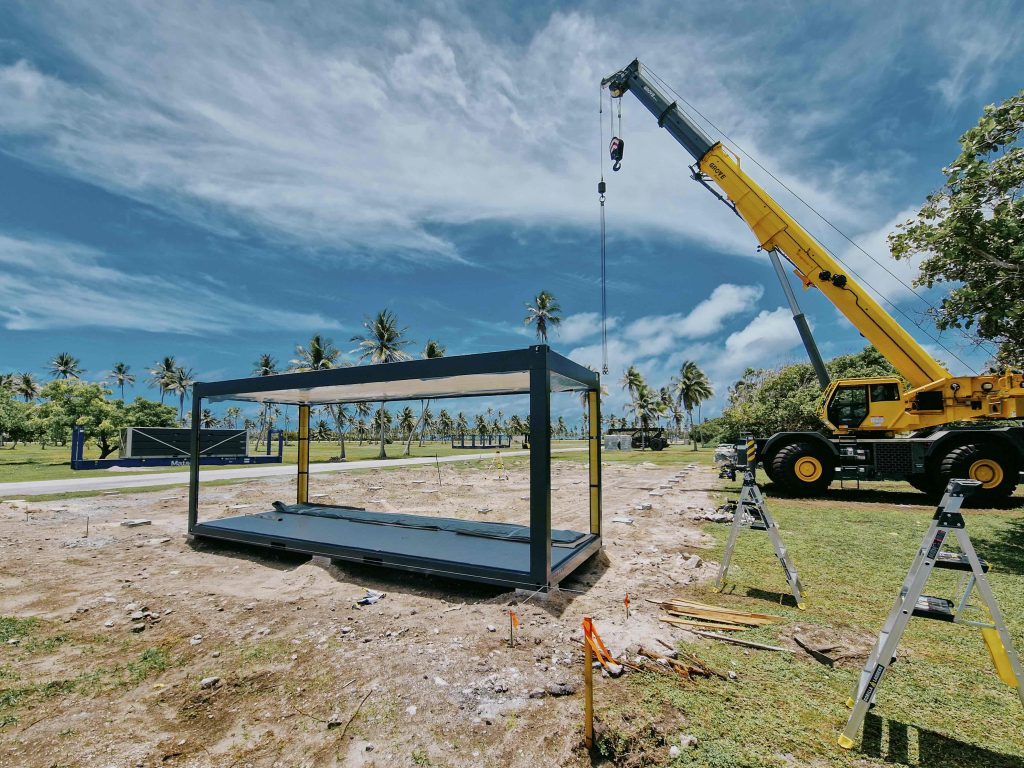
Roi Namur, a remote island in the Pacific, posed a unique set of challenges for our modular construction team. Limited infrastructure, unpredictable weather, and logistical hurdles made traditional construction methods inefficient. That’s where our expertise in modular building made all the difference.